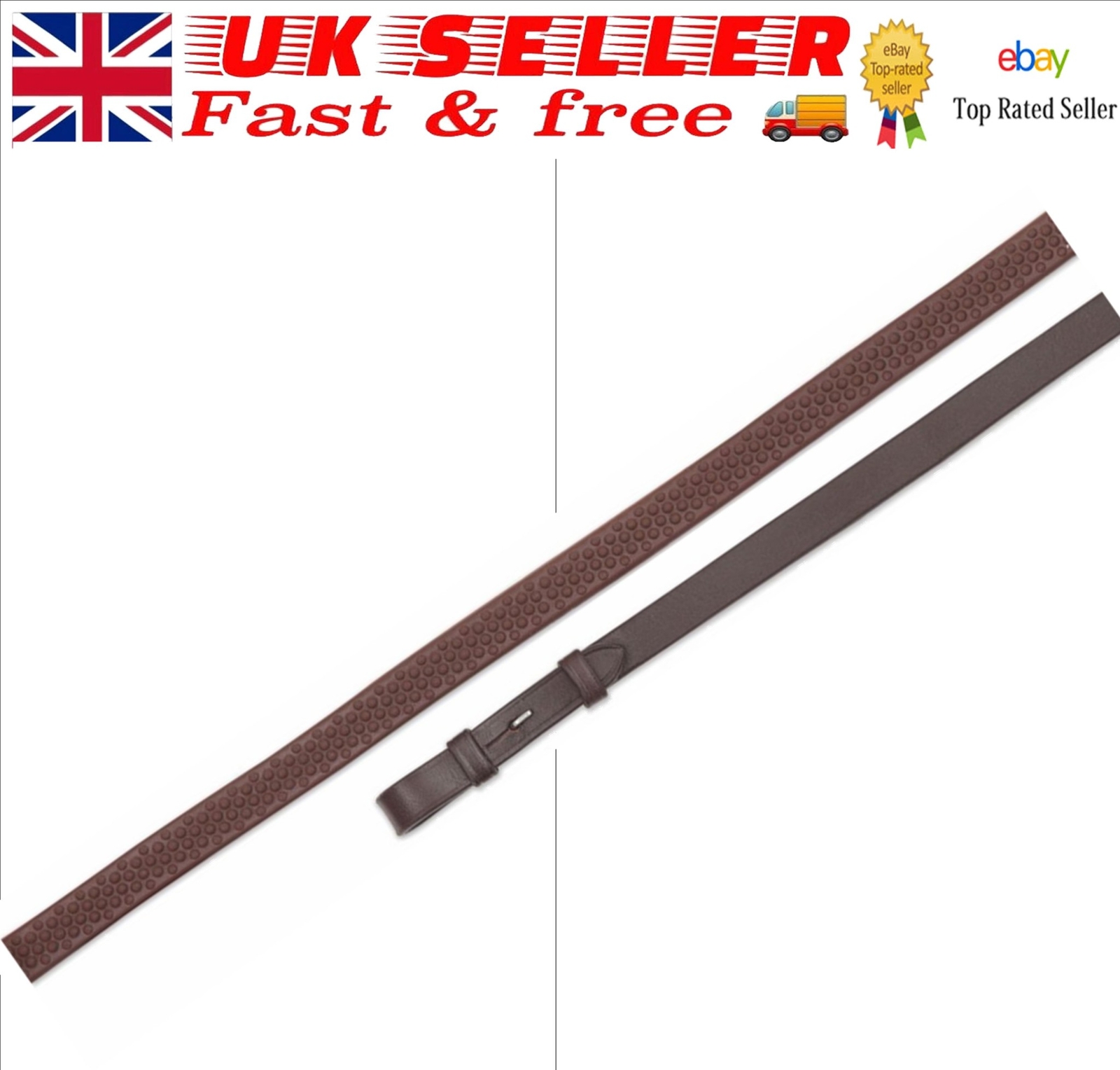
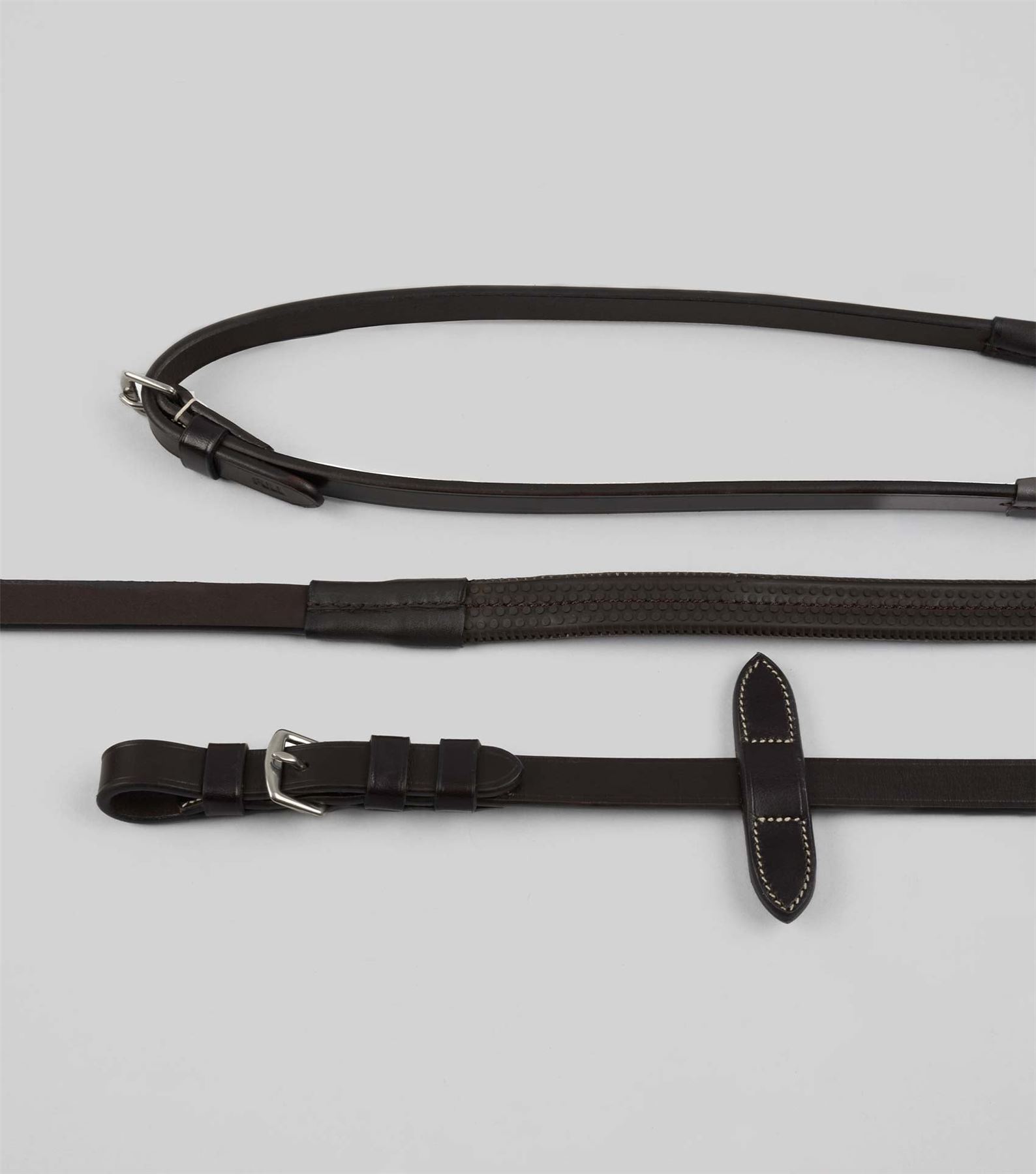
Reins
How to choose reins
Material by discipline
Choose leather if you want traditional tack for showing. Pick rubber or leather/rubber if your hands slip in winter, since rubber suits schooling and leather suits bridle sets.
Colour and care
Colour affects upkeep on the yard. Black, brown, or havana hide dirt, while red, blue, or pink stand out but need more washing.
Full reins vs parts
Decide between full reins and cheek pieces. Some Equestrian or Horse Tack listings are cheek pieces only, which won't replace a full rein on its own.
Weight and feel
Weigh material density before buying. Leather/lead offers a heavy, consistent feel for trained horses, while nylon/rubber is lighter and wrong for riders wanting strong contact.
Hardware match
Match metal tones to your existing tack. If your bridle is plain, black or brown works, but black/silver or brown/silver keeps the set coherent if you already have silver.
What's good
- Leather/rubber and rubber reins give secure grip in wet weather. They beat plain leather for daily schooling in the UK.
- Nylon or cotton rope styles suit training loops. They are lighter than full leather tack for young riders or ponies.
- Leather/stainless steel and rubber/silver options match bridle hardware. They need no extra polish on the yard.
- Split, loop, or romal designs let you pick fixed length versus continuous hold. They cover clinician and barrel work for riders in this category.
Things to watch
- Plain leather reins need regular conditioning. They stiffen faster than rubber or nylon mixes in typical rain.
- Nylon/rubber or cotton rope types lack the weight of leather/lead. They feel vague to a horse needing clear contact.
- Pink, blue, or grey shades show dirt more than black, brown, or havana versions. This matters during muddy turnout.
- Silver and black/silver combinations scratch on fence posts. They look tired before the leather itself wears out.
Care & maintenance
Leather care
Wipe leather and leather/rubber reins with a damp cloth after mud. Use saddle soap to keep the grain supple.
Rope care
Rinse nylon or cotton rope reins in cold water. Hang them straight to dry so they do not kink.
Fitting checks
Check leather/lead or leather/stainless steel fittings for wear. Look at the billet ends before each ride.
Frequently Asked Questions
What should I look for when buying reins?
When shopping for reins, consider factors such as quality, price, brand reputation, and customer reviews. Compare prices across multiple retailers to ensure you're getting the best deal. Look for products that match your specific needs and budget.
How do I choose the right reins?
Choosing the right reins depends on your individual needs, budget, and preferences. Research different options, read customer reviews, and compare specifications. Consider what features are most important to you and look for products that offer the best value for money.
Where can I find the best deals on reins?
You can find the best deals on reins by comparing prices across multiple retailers. Our price comparison tool helps you find the lowest prices from trusted UK retailers including Amazon, eBay, and other major online stores. Check regularly as prices and deals change frequently.
Are reins products worth the investment?
The value of reins products depends on your specific needs and how you plan to use them. Quality products from reputable brands often provide better long-term value, even if they cost more initially. Consider your budget and requirements when making your decision.
What's the difference between different types of reins?
Different types of reins vary in features, quality, price, and intended use. Some may offer premium features while others focus on affordability. Research the specific differences between models or brands to find the option that best suits your needs and budget.